Cast Off Methods Knitting . This cast off creates a neat edge that looks like a row of crochet chains along the top. You need a tapestry needle for. HOW TO KNIT PART 4 HOW TO BIND OFF Nemcsok Farms from nemcsokfarms.com Repeat steps 5+6 until you only have one single stitch left on your right needle. Insert the working needle into the first two stitches in a front and up direction. Wrap the yarn around the needle.
Acceptance Rejection Method Triangular Distribution
Acceptance Rejection Method Triangular Distribution. That can be regarded as realizations of independent and identically distributed random variables. Generate a random number and replace p by.
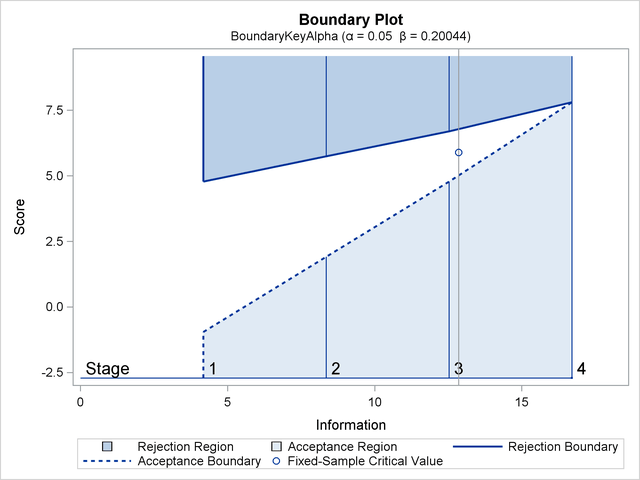
PROC SEQDESIGN Creating Whitehead’s Triangular Designs SAS/STAT(R from support.sas.com
The acceptance/rejection method can be extended for discrete target distributions. If , then accept n = n, meaning at this time unit, there are n arrivals. In this paper, the geometric sense of acceptance rejection method of generating random variables and the rotation method of generating uniform distribution on a triangle are given.we give an example of generating exponential distribution by using both methods together.
Set N = 0, P = 1.
The method works for any distribution in with a density. Whenever it lies inside the area under the original probability distribution, we will accept it. Y with density gsatisfying f(t)=g(t) c.
Instead, Draws Are Taken From An Instrumental Density And Accepted With A Carefully Chosen Probability.
In our triangle distribution example, \(h(x) = 0.5\), \(0
The Efficiency Of This Method Depends On The Degree Of Complexity Of Random Number Generation With Distribution Density G(X) , Computational Complexity For The Functions
If , then accept n = n, meaning at this time unit, there are n arrivals. If the point is in the lower triangle then it is accepted and if in the upper triangle then it is rejected. It should be obvious that the accepted points are uniform in the accepted area,.
1 Generate U 1 ,U 2 ,U 3 From Unif [0,1] 2 X ← −Log (U 1 ) 3 If U 2 > Exp (−0.5 (X − 1) 2 ).
Otherwise, reject the current n, increase n by one, return to step 2. Go back until condition met. • the probability that a value x lies between a and b, where a>b, is the integral of function between a and b.
Gamma, Poisson, Binomial Deviates 281 Sample Page From Numerical Recipes In Fortran 77:
This method also requires a sequence of independent and. Defining a rejection criterion for the random samples A comparison is made with the known, theoretical results.


Comments
Post a Comment